Multi-generational living is growing across Canada, and for many families it is as much a financial decision as a lifestyle one. This post looks at what the census actually tells us about shared households, how the economics tend to work for Welland and Niagara families, and why a home like 42 Terrace Avenue is built for the arrangement. No hype, just the numbers and the honest questions worth asking.
More Canadians Are Choosing to Live Together
According to Statistics Canada's 2021 census, there were 441,750 multigenerational households in Canada, households with at least three generations of the same family under one roof. Those homes were home to about 2.4 million people, roughly 6.4 per cent of the population living in private households. The number of multigenerational households rose 8.6 per cent between 2016 and 2021, and they were among the fastest-growing household types in the country over that period.
Ontario follows the same pattern. Multigenerational households made up 4.0 per cent of the province's private households in 2021, about 222,770 households, up from 3.9 per cent in 2016. The trend is not a niche: it is a structural shift in how Canadian families are choosing to live, and it shows up in the homes families look for.
Why the Numbers Are Moving
The reasons are familiar to most families. Housing costs are higher than they used to be, so pooling resources makes practical sense. Childcare is expensive, and having grandparents close by changes the daily equation for working parents. At the same time, many older Canadians want to age near family rather than alone, and many adult children are staying home longer or moving back to save. When you add it up, sharing one well-designed home can serve several generations at once, each with its own rhythm.
What the Shared-Household Math Looks Like
The financial logic is straightforward, though every family's numbers are different. Two or three incomes can qualify for a larger mortgage than one, which often means a better home in a better location than any single generation could manage on its own. Fixed costs, property tax, utilities, insurance and maintenance, get spread across more people, which lowers the per-person cost of housing. And when one generation provides childcare or caregiving, the family can avoid or reduce paid care services, a real saving that rarely shows up on a spreadsheet but shows up in the monthly budget.
None of this is a guarantee, and it is not the right fit for every family. What the census data shows is simply that a growing number of Canadian families are deciding the trade-offs are worth it.
What Lenders Look At
If you are considering buying with family, the mortgage conversation is worth having early. Lenders can consider multiple borrowers on one application, which can strengthen the file, and there are different ways to structure ownership, from joint ownership to one generation co-signing for another. Each option has different tax and estate implications, so it is worth talking through the structure with a mortgage professional and a lawyer before you start viewing homes. Getting pre-approved as a household, with everyone's income and debts on the table, gives you a realistic number to shop with.
The Layout That Makes It Work
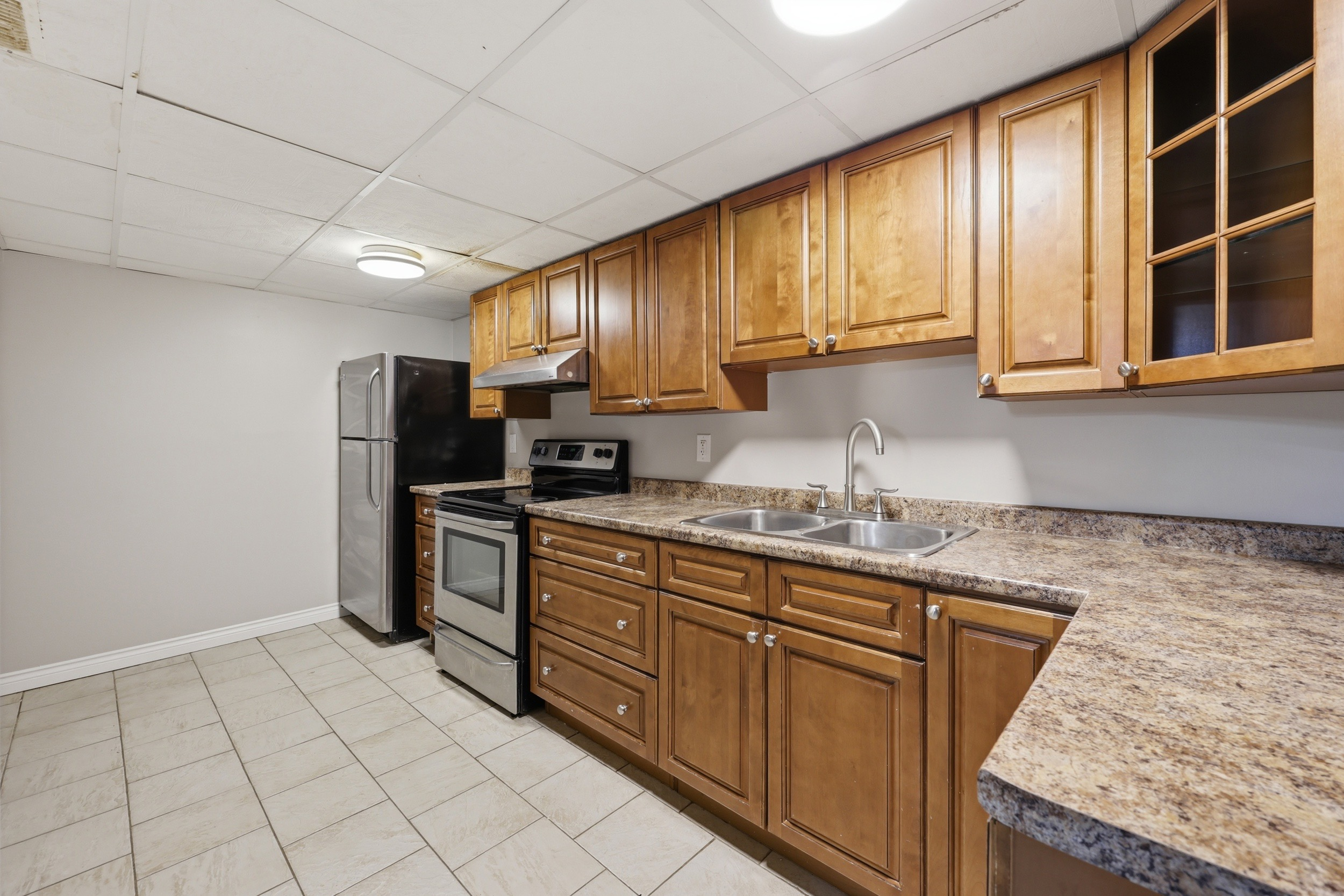
The census tells us families are choosing to live together. The right floor plan is what makes it comfortable. 42 Terrace Avenue in Welland is a 4-level semi-detached backsplit with 3+1 bedrooms, two kitchens, a separate entrance to the lower level and multiple living areas, on a 30 by 110 foot lot with no rear neighbours. A second kitchen and a separate entrance are exactly the features that let two generations share a home while keeping their own routines, meals and comings and goings. Recent updates include new laminate flooring on the main and upper levels, a freshly painted interior and an updated main bathroom (2026), and the home is carpet-free throughout.
Welland's Market Context, as of Late 2026
For context on price, Royal LePage's Q3 2026 House Price Survey, released October 15, 2026, put the aggregate home price for the Niagara and St. Catharines area at $614,200, down 3.3 per cent from a year earlier. In Welland specifically, the MLS Home Price Index benchmark price sat around $480,000 to $490,000 in September and October 2026, down roughly three per cent year over year, according to the Niagara Association of REALTORS data published by CREA. Welland remains one of the more affordable markets in the Niagara region, which matters when a household is pooling incomes to make the numbers work.
Those figures are a snapshot of late 2026, not a prediction. Markets move, and your personal budget is what matters most. The point is simply that Welland offers a realistic price point for a home with the space a multi-generational household actually needs.
Thinking About Living Together as a Family?
Whether you are just starting the conversation or you already know the layout you need, I am glad to walk you through what a home like 42 Terrace Avenue could look like for your family. A relaxed conversation is a great first step, and there is no pressure to decide anything on the spot.
Census figures are from Statistics Canada's 2021 Census of Population. Market figures are as of late 2026 and are specific to the Niagara region and Welland; prices and benchmarks change over time. This post is general information, not financial, legal or tax advice. Verify current details with the cited sources and a qualified professional.